
Shoe repairs, layer by layer
Understand soles, heels, uppers and linings before choosing shoe repairs, cleaning or restoration. Explore the construction and what assessment needs to establish.
A worn sole and a tired-looking upper are different problems. The sole takes ground contact, the heel controls the rear contact surface, and the upper and lining hold the shape around your foot. Identifying the affected part makes it easier to discuss useful work without replacing sound components.
Start with the whole pair, then look at the sole edges, heel surfaces, seams and inside heel lining. Dress shoes, boots, trainers and specialist footwear use different constructions. A stitched welt is one example, not a feature of every shoe. The Oxford illustration below explains a representative construction; the studio assesses your actual pair before confirming suitable work.
Materials you may encounter
- Smooth finished leather
- Suede and nubuck
- Leather and rubber soles
- Textile and mixed-material uppers
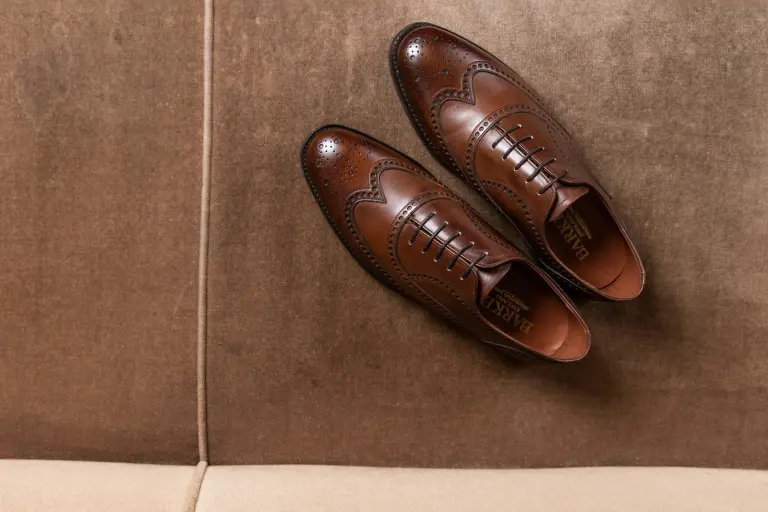
Meet the parts.
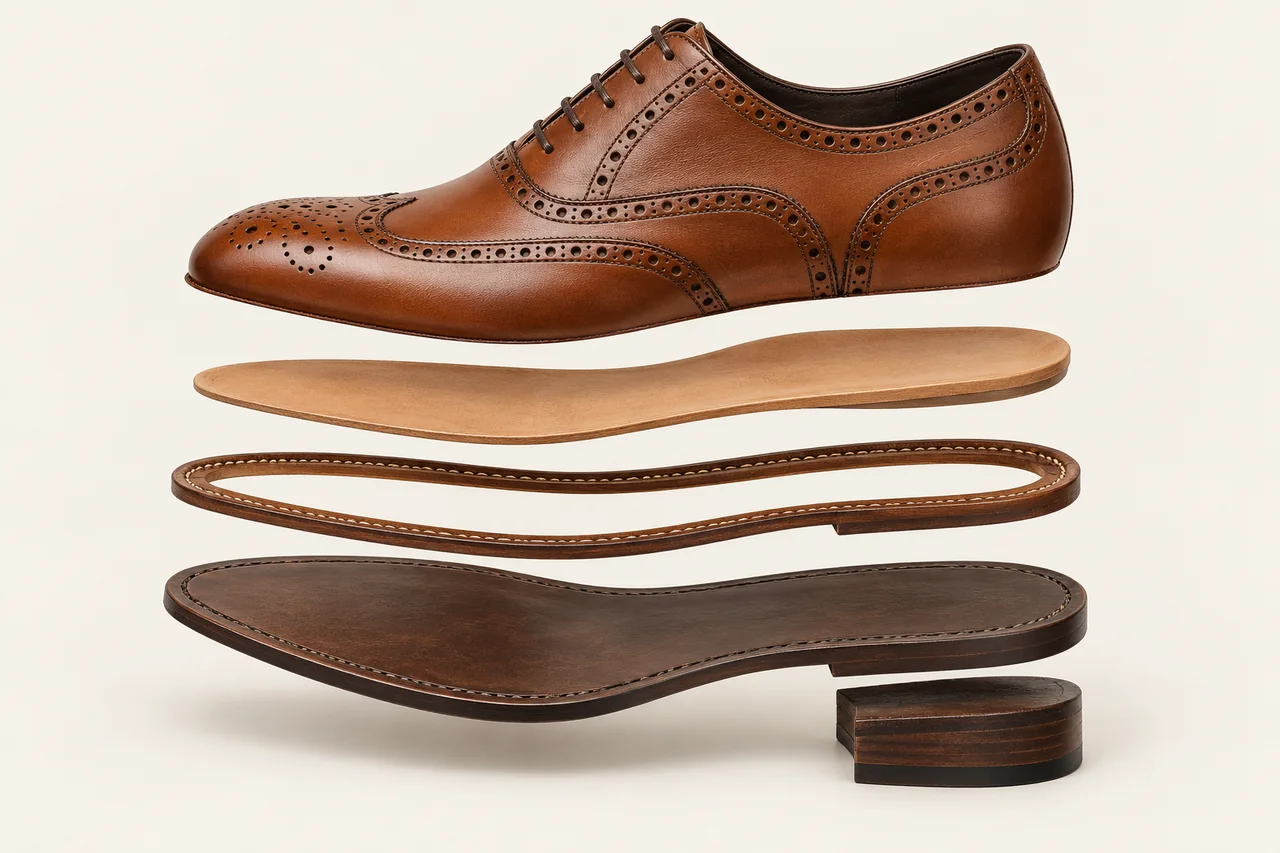
Open a part to understand its role and what assessment needs to establish.
Upper & lining
The outer leather and inner lining form the body of the shoe. Surface scuffs, a split seam and a hole through the leather need different assessments.
Insole & cushioning
The footbed sits inside the shoe, above supporting layers. A removable insert is different from the structural insole used in some constructions.
Welt & stitching
A welt is an edge assembly used in some stitched shoes. Loose stitching or a damaged welt can affect how a replacement sole is fitted.
Outsole
The ground-contact layer wears through at pressure points. Thickness, splitting, detachment and the condition beneath the sole influence the repair.
Heel & top piece
The heel block supports the rear of the shoe; its top piece meets the ground. Replacing a worn surface differs from rebuilding the block.
Explore the work.
These guides explain selected repairs and care options. Suitability, scope and price are agreed for your item after assessment.
Leather sole replacement
Understand a leather resole: what is replaced, what must remain sound, and how construction affects the work.
Read the service guideHeel tip replacement
Identify wear at the heel's contact surface and distinguish a replacement tip from rebuilding a damaged heel.
Read the service guideShoe cleaning and stain assessment
Discuss material-appropriate cleaning for footwear, with clear limits around stains, colour loss and structural damage.
Read the service guide
Common concerns
- Thin or separating soles
- Uneven heel wear
- Worn lining and broken seams
- Scuffs, staining or colour wear
Prepare a useful brief
- Keep both shoes together, even if only one appears damaged.
- Note whether the problem is wear, separation, fit or appearance.
- Photograph both soles and the affected part if discussing the repair with the studio.
Repair, clean or refinish?
Structural work addresses a part that is worn, detached or broken. Cleaning removes suitable surface soiling; conditioning and finishing address the material and appearance. A shoe can need both, but a polish cannot restore missing sole thickness or close a torn lining.
Choose the necessary repair first, then discuss whole-pair care. Related tasks may be combined in one assessment. The final price depends on materials, construction, access and the condition found when the pair is inspected.
Questions to bring to an assessment
Can every shoe be resoled?
No. The attachment method, condition of the upper and supporting structure, and availability of compatible materials matter. A welted Oxford, a bonded trainer and a moulded boot need different approaches. Inspection is the starting point.
Should I choose a new sole or heel repair?
Look at where the wear is. A worn heel surface may be a separate job from a thin forepart sole. If you cannot tell, choose an assessment rather than guessing; keep the whole pair available for comparison.
Can repair and cleaning be requested together?
Yes. Keep the repair and care choices with the same item in your enquiry. The studio can then confirm an appropriate sequence and whether any requested tasks overlap.
Keep exploring
Bring the question to the studio.
You do not need to name the repair. Show us the whole item and the area that concerns you. We discuss the suitable work, price and timing before work begins.