
Unusual items deserve a specific assessment
Prepare a clear brief for vintage leather, unusual constructions and bespoke repair concerns without assuming a standard service will fit.
An unusual or older item may not fit a standard service description. Its material, construction, previous repairs and intended use can all affect what is possible. The most useful starting point is a clear account of the concern and the parts you want to preserve.
The vintage-case illustration separates covering, support, lining and hardware to show how different layers can age independently. It is one example, not a promise that the studio can undertake every specialist object or reproduce any missing part. The assessment establishes the scope before a repair proposal is agreed.
Materials you may encounter
- Older and unusual leathers
- Supporting boards and frames
- Historic textiles and linings
- Original or replacement fittings
Meet the parts.
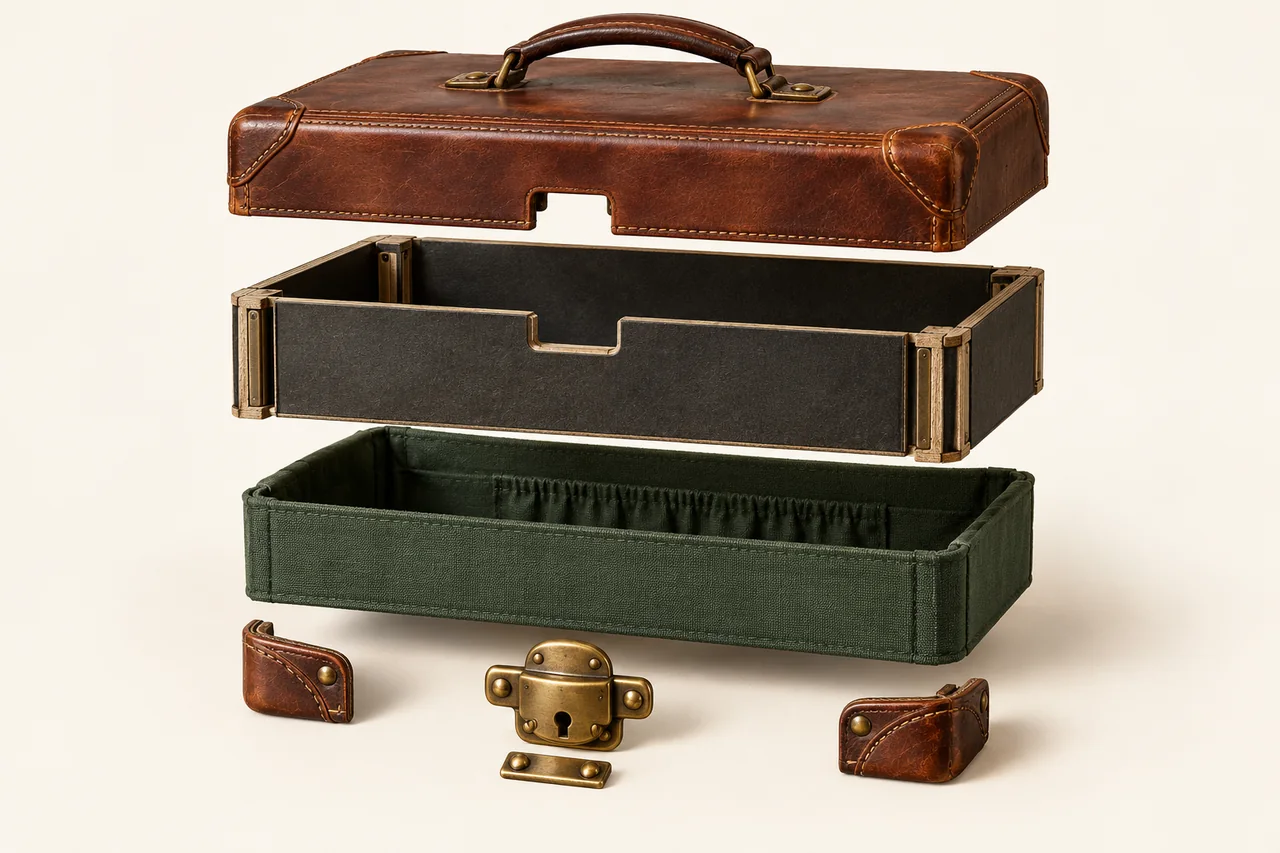
Open a part to understand its role and what assessment needs to establish.
Outer covering
The visible leather or finish can be fragile or altered by earlier treatments. Cleaning, colour work and preservation need to be discussed separately.
Supporting panels
Rigid inserts or frames may have weakened beneath an intact-looking surface. Loss of shape can involve more than the outer leather.
Lining & interior
Interior fabrics, pockets and fittings can require a different conservation or repair approach from the outer shell.
Hardware & attachments
Original fittings may be unavailable or important to preserve. Replacement, adaptation and retention are different choices.
Explore the work.
These guides explain selected repairs and care options. Suitability, scope and price are agreed for your item after assessment.
Common concerns
- Unknown construction or material
- Fragile or previously repaired areas
- Missing fittings or loss of shape
- Balancing function with original character
Prepare a useful brief
- Show the whole item, the concern and any previous repair.
- Explain the intended use and what should remain original.
- Mention provenance or supporting documents without assuming that an assessment includes formal authentication or valuation.
Agree what improvement means
For one owner, success may mean returning an item to daily use. For another, retaining original material matters more than disguising every mark. Describe the desired outcome and acceptable changes so the proposed work can be assessed against the right brief.
A feasibility discussion is different from authentication, a formal valuation, an insurance report or a structural certification. Ask about those services specifically if needed. The studio will confirm the work within its scope and explain where another specialist may be appropriate.
Questions to bring to an assessment
Can you quote from a description alone?
A description can begin the discussion, but concealed construction, fragile material and previous repairs often need closer inspection. A firm scope and price follow an appropriate assessment.
Will restoration make an older item look new?
That result is not assumed. Age, grain, finish, missing material and the preservation brief affect the available options. Agree the intended appearance before work begins.
Does specialist assessment include a valuation?
Not automatically. Feasibility, authentication, valuation and an insurance report are different briefs. Confirm the exact service and any required documentation directly with the studio.
Keep exploring
Bring the question to the studio.
You do not need to name the repair. Show us the whole item and the area that concerns you. We discuss the suitable work, price and timing before work begins.