
Bag repairs beyond the surface
Explore handles, straps, linings, corners and fittings. Understand what affects bag repair and how cleaning can accompany structural work.
A bag carries its load through handles, straps, attachment tabs, seams and the base. Damage at one visible point can involve reinforcement hidden inside. A loose handle, torn lining or worn corner therefore deserves a closer look before choosing a cosmetic treatment.
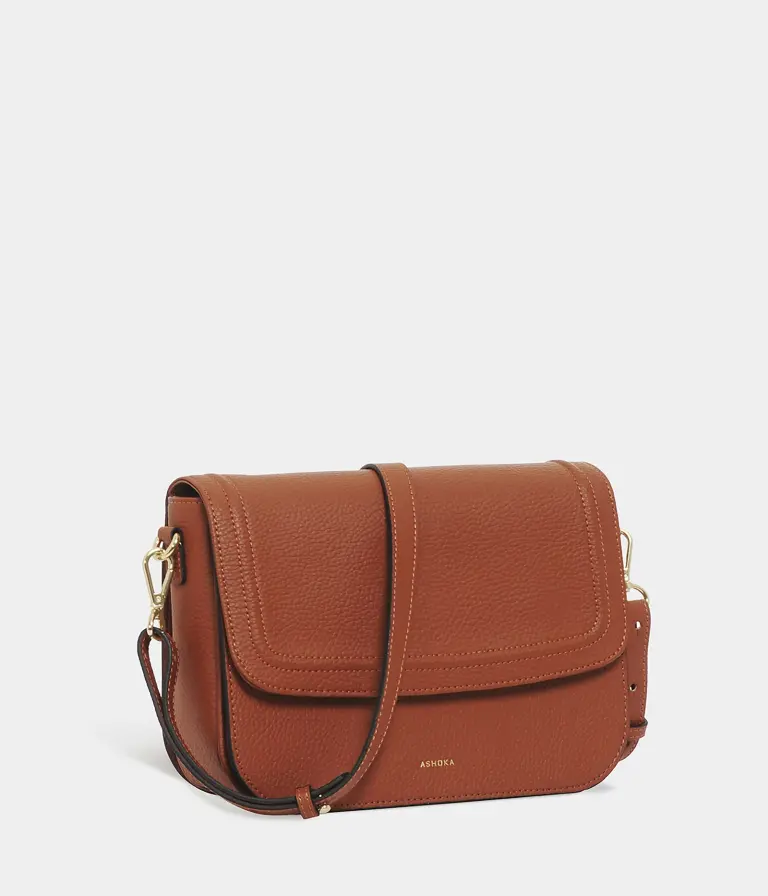
Use this guide for handbags, crossbody bags, briefcases and smaller leather goods. Soft bags and rigid framed pieces are built differently, and coated fabrics are not interchangeable with leather. The illustration shows one structured bag as a reference, not the concealed construction of a particular brand or model.
Materials you may encounter
- Smooth leather and suede
- Canvas and coated fabrics
- Textile linings
- Metal closures and fittings
Meet the parts.
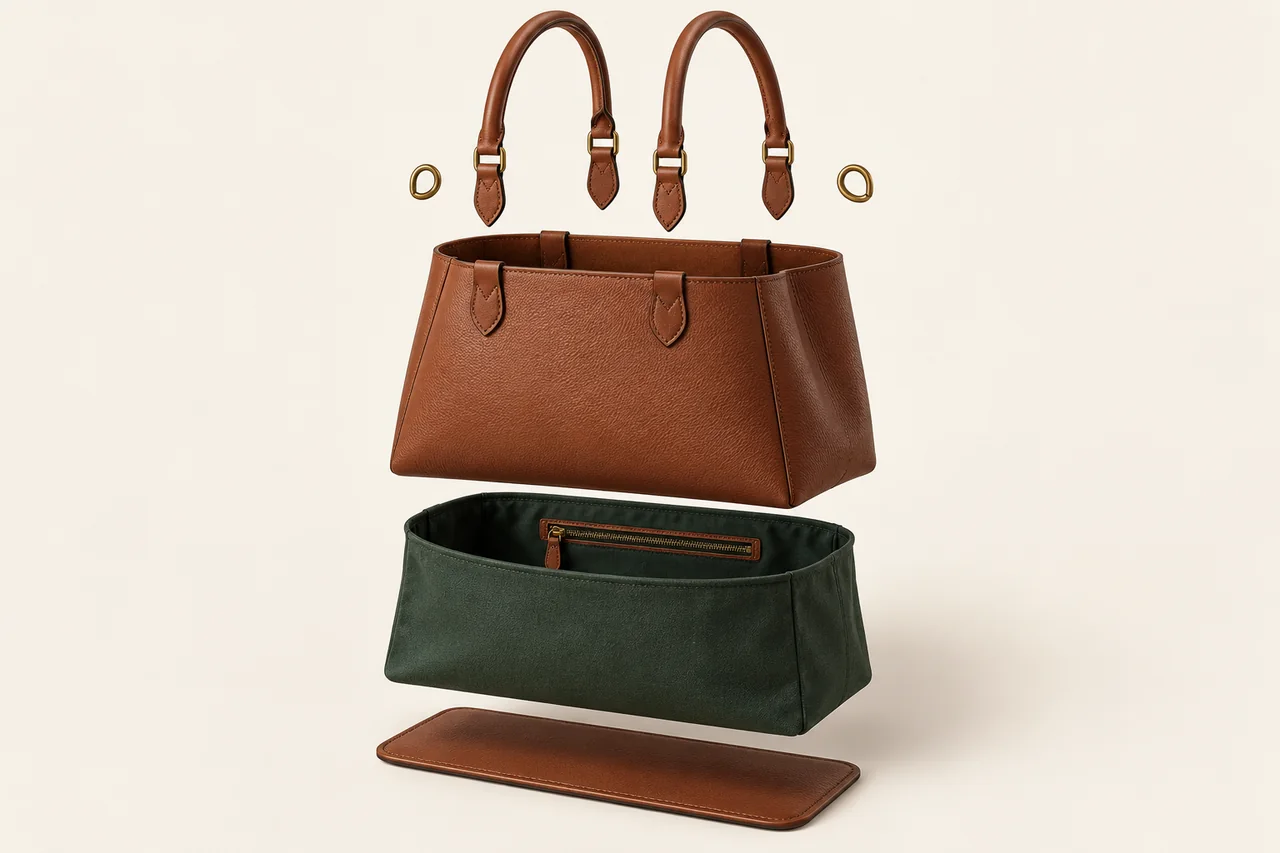
Open a part to understand its role and what assessment needs to establish.
Handles & straps
The visible handle or strap connects to tabs, rings and internal reinforcement. Wear can affect the attachment as well as the part you hold.
Outer panels & corners
The body panels shape the bag. Corners and edges often wear first; surface colour loss is different from material worn through.
Lining & pockets
The lining finishes the inside and forms pockets. Access to a damaged attachment sometimes involves opening and reinstating a lining seam.
Base & reinforcement
A rigid insert or supporting panel can help distribute the load. A soft base and a structured base call for different work.
Hardware & closures
Zips, clasps, buckles, rivets and rings have different functions. Replacement depends on dimensions, attachment and compatible availability.
Explore the work.
These guides explain selected repairs and care options. Suitability, scope and price are agreed for your item after assessment.
Bag handle and stitching repair
Understand handle wear, attachment tabs and hidden reinforcement before requesting a bag handle or stitching repair.
Read the service guideBag lining replacement
Explore relining, damaged pockets and access work, and understand what affects a suitable replacement lining.
Read the service guide
Common concerns
- Worn handles or attachment tabs
- Split seams and exposed corners
- Torn lining or pockets
- Damaged zips, clasps and fittings
Prepare a useful brief
- Empty all pockets and remove personal documents before an assessment.
- Explain how the bag is usually carried and what first failed.
- Show both sides of a strap attachment and the inside lining if accessible.
Keep the original character in view
A useful repair should suit the way the bag is built and used. Reinforcing an attachment may matter more than disguising a mark. Where colour or hardware matching is involved, discuss the desired result and acceptable differences before work is agreed.
Cleaning, colour work and structural repair are separate choices. A replacement lining will not automatically include cleaning the outside, and recolouring will not restore missing reinforcement. Group the requests under the same bag so the studio can assess the whole brief.
Questions to bring to an assessment
Does a damaged handle always need full replacement?
Not necessarily. The problem may be a seam, an attachment tab or hidden reinforcement rather than the handle itself. The surrounding material must be sound enough to support any proposed work.
Can original hardware always be matched?
No exact match is assumed. Dimensions, fixing method, finish and availability all matter. The studio will discuss suitable options after inspecting the fitting and its attachment.
Can a lining be repaired without changing the outside?
Sometimes. Access, lining material and the original seams determine the approach. Keep the bag empty so the studio can inspect the interior properly and explain any access work.
Keep exploring
Bring the question to the studio.
You do not need to name the repair. Show us the whole item and the area that concerns you. We discuss the suitable work, price and timing before work begins.