
Leather clothing repairs with context
Explore jacket panels, linings, seams and closures. Separate material damage from fastening problems and understand cleaning and repair choices.
A leather jacket is a shaped garment, not a single sheet of leather. Outer panels, the lining, pocket bags, zips and seam allowances all affect how a repair can be reached and how the finished piece sits. A split seam and a tear through a panel are different problems.
Before choosing a service, locate the damage and note whether it affects fit, closure, lining or appearance. Leather, suede, nubuck and coated materials respond differently to care and colour work. The representative layered jacket below helps explain the construction; it does not establish the material or repair method for your garment.
Materials you may encounter
- Finished garment leather
- Suede and nubuck
- Textile and quilted linings
- Metal zips, studs and buttons
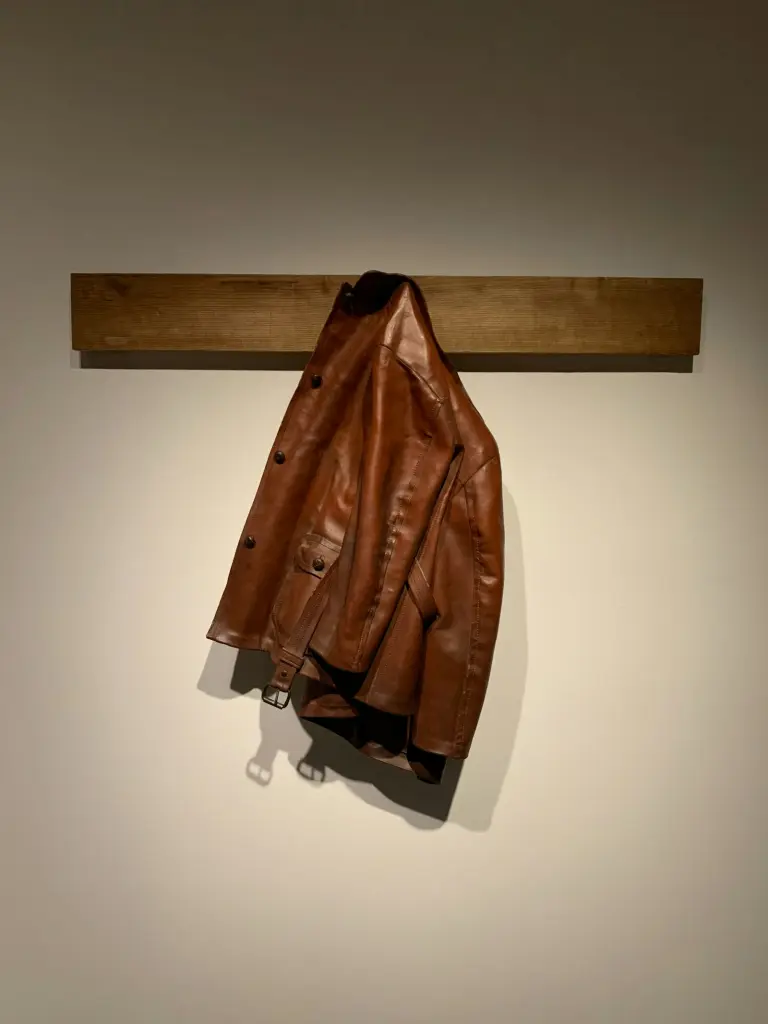
Meet the parts.
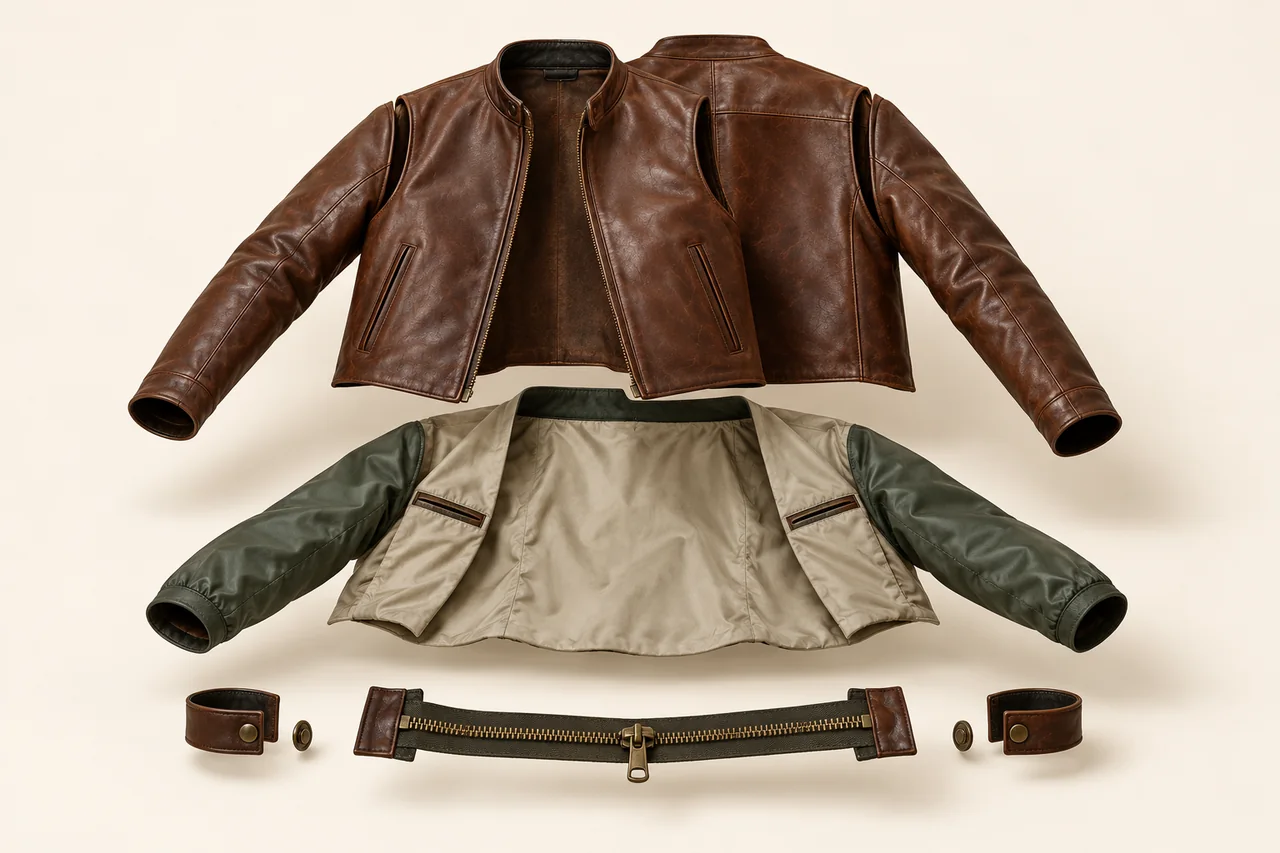
Open a part to understand its role and what assessment needs to establish.
Outer leather panels
The shaped leather panels form the outer garment. Tears, scuffs and finish loss need different treatments depending on the material and surrounding condition.
Lining & pocket bags
Inner fabric supports comfort and pocket construction. Worn sleeve lining and a torn pocket can require different access and replacement areas.
Zips & fastenings
The slider, teeth, tape and stops belong to the zip assembly. Buttons, studs and buckles depend on their own fixing and reinforcement.
Seams & edges
Stitching joins shaped panels at seam allowances. Repeated stress or weakened leather may require more than resewing the visible thread.
Explore the work.
These guides explain selected repairs and care options. Suitability, scope and price are agreed for your item after assessment.
Leather jacket zip replacement
Understand the role of slider, tape, garment opening and lining access in a suitable jacket zip replacement.
Read the service guideLeather jacket lining repair
Distinguish a local lining repair from broader relining and understand access around sleeves, pockets and seams.
Read the service guide
Common concerns
- Front zip or slider failure
- Torn sleeve lining or pockets
- Open seams and weakened stitching
- Scuffs, fading or a torn panel
Prepare a useful brief
- Empty pockets and note any detachable accessories.
- Photograph the whole garment and both sides of the affected area.
- Explain whether you want a structural repair, care treatment or a change in fit.
Think about access and fit together
Replacing a zip or repairing a seam can require opening the lining. The original garment shape, stitching and material condition influence what is practical. A fit alteration is a separate discussion from repairing a broken component.
Material-appropriate cleaning can accompany repair, but it should not be treated as a universal dry-cleaning process. The studio assesses the leather and finish first. Discuss stains, previous treatments and the desired appearance rather than applying a new product immediately before the assessment.
Questions to bring to an assessment
Can a leather tear be made invisible?
An invisible result cannot be promised. Location, tear shape, colour, grain and surrounding strength affect the options. Discuss whether reinforcement, a patch or a visible repair would suit the garment.
Does a broken zip always require a new zip?
The slider, teeth and tape need inspection first. If replacement is appropriate, length, opening type and access through the lining affect the work.
Can cleaning and lining work be combined?
They can be requested under the same garment. The studio can confirm compatible treatments, access work and the order of tasks after examining the piece.
Keep exploring
Bring the question to the studio.
You do not need to name the repair. Show us the whole item and the area that concerns you. We discuss the suitable work, price and timing before work begins.