
Cleaning, conditioning and protection
Understand the difference between cleaning, conditioning, polishing and protection, and how care can be combined with a repair.
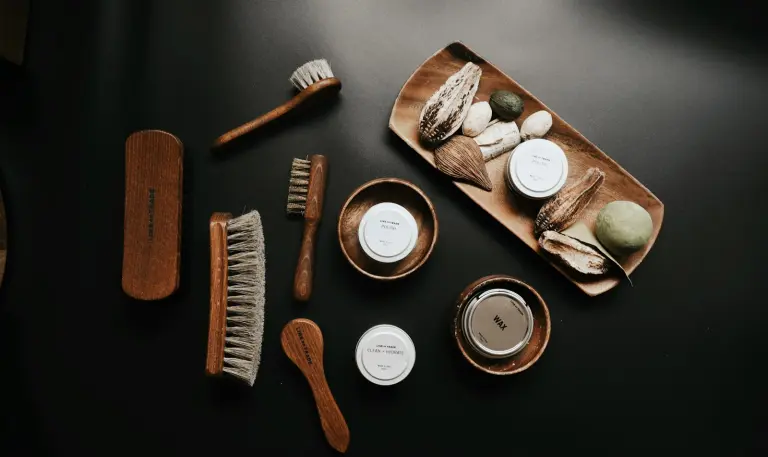
Cleaning, conditioning, polishing and protection do different jobs. Cleaning addresses appropriate soiling; conditioning addresses the material's care needs; polish changes the finish; protection is chosen for the expected exposure. None is a substitute for repairing a torn seam or a worn-through sole.
Start by identifying the item and its material, then explain what you want to improve. Finished leather, suede, nubuck, coated fabrics and mixed materials cannot all be treated in the same way. The layered material illustration is an educational simplification, not a microscopic specification for every leather.
Materials you may encounter
- Finished smooth leather
- Suede and nubuck
- Textiles and coated materials
- Mixed-material items
Meet the parts.
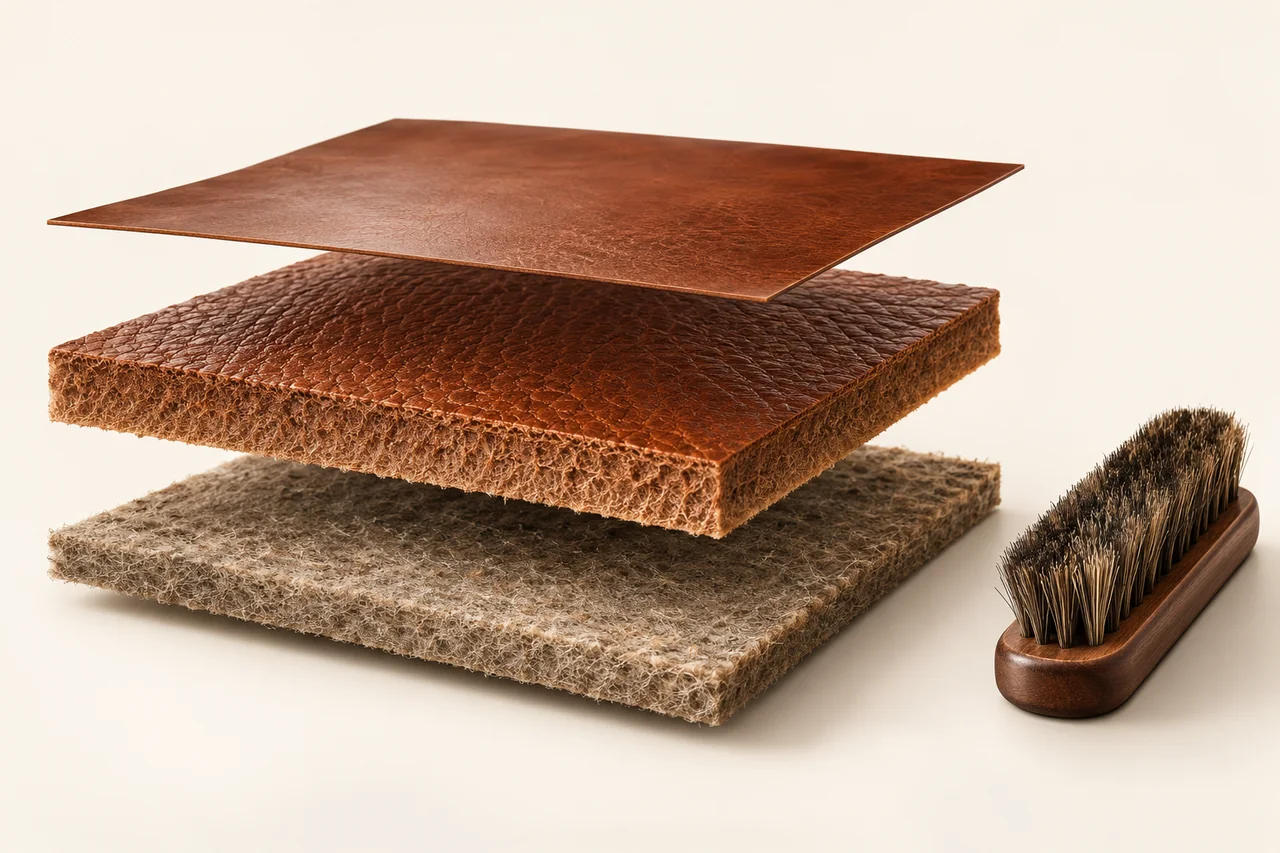
Open a part to understand its role and what assessment needs to establish.
Surface finish
The visible coating or finish affects sheen, colour and product compatibility. A surface mark is different from damage through the material.
Leather or material body
The underlying material has its own condition and structure. Heavy deterioration cannot be assessed only from a photograph of the finish.
Backing & neighbouring materials
Linings, reinforcement, trims and adjacent textiles can limit how a treatment is applied. The whole item matters, not just one visible panel.
Explore the work.
These guides explain selected repairs and care options. Suitability, scope and price are agreed for your item after assessment.
Professional deep cleaning
Explain the material and soiling so the studio can assess an appropriate cleaning process and its limits.
Read the service guideLeather polishing and conditioning
Distinguish material care from changes to the surface finish before choosing a leather treatment.
Read the service guide
Common concerns
- Surface dirt or staining
- Dull finish or uneven appearance
- Dryness or uncertain previous treatment
- Choosing care alongside a structural repair
Prepare a useful brief
- Describe the material if known; choose assessment if unsure.
- Mention stains and any products already applied.
- Keep removable accessories with the item and discuss which surfaces need attention.
Start with the outcome, not a product name
Tell the studio whether you want a cleaner surface, a revived finish, material care or protection for a particular use. It can then explain the appropriate process and any limitations. More treatment is not always better, and one product should not be assumed suitable for every material.
Where repair is also needed, group it with the same item. Access work, replacement parts and cleaning may need a particular sequence. Ask what is included before combining guide prices, since some work may already include a finishing step.
Questions to bring to an assessment
Is professional cleaning the same as dry cleaning?
Not automatically. The method depends on the item, materials, finish and concern. Describe the item first rather than assuming a single process is suitable for all leather goods.
Will protection make an item completely waterproof?
Do not assume an absolute waterproof result. Material, seams, construction, exposure and the chosen treatment all matter. Discuss the intended use and the limits of the proposed process.
Can colour work remove structural damage?
No. Colour restoration addresses appearance. A tear, weakened seam or worn component needs a separate assessment even when the surface can also be cleaned or refinished.
Keep exploring
Bring the question to the studio.
You do not need to name the repair. Show us the whole item and the area that concerns you. We discuss the suitable work, price and timing before work begins.