
Saddlery: understand the layers and load
Explore saddle leather, padding, supporting structures, straps and stitching. Learn what to show the studio and when specialist assessment matters.
Saddlery combines leather surfaces with stitching, supporting components and load-bearing attachments. A worn flap, fraying thread and a suspected structural problem are not interchangeable repairs. It is important to identify the part and explain how the item is used before discussing the scope of work.
Saddles, bridles, harness and related leather tack vary widely in construction. The English-saddle illustration explains representative layers; the reference photograph shows another saddle type. Neither establishes fit, strength or serviceability. If damage may affect safe use, arrange an appropriate specialist assessment rather than relying on an online illustration.
Materials you may encounter
- Saddle and bridle leather
- Padding and lining materials
- Thread and reinforcement
- Buckles and metal fittings
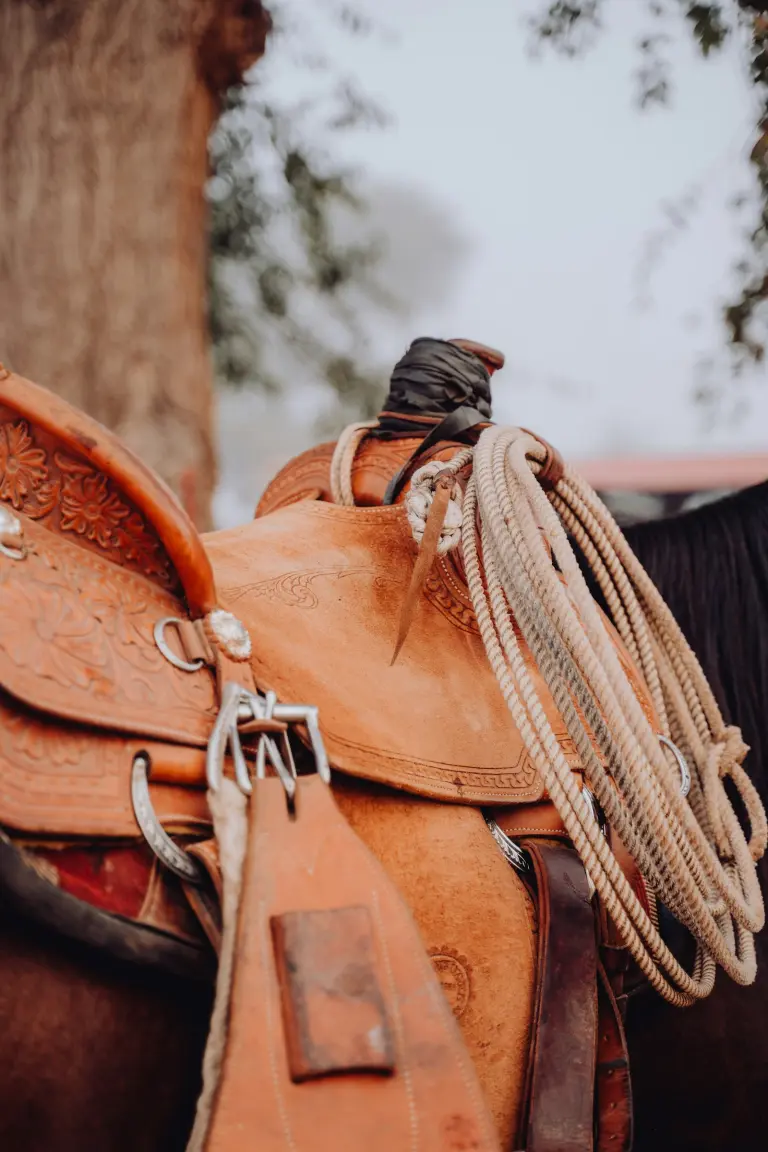
Meet the parts.
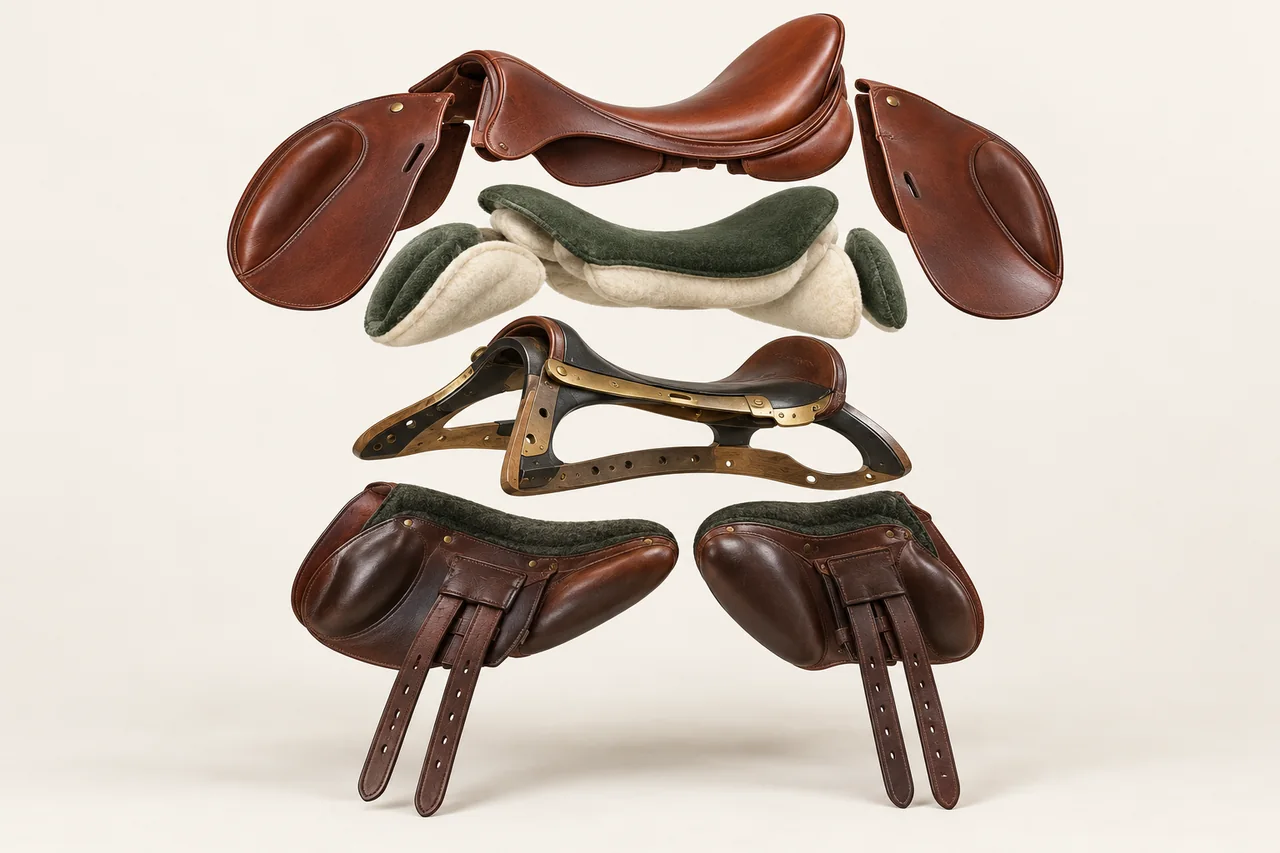
Open a part to understand its role and what assessment needs to establish.
Seat, flaps & outer leather
Visible leather surfaces can wear, crack or lose stitching. The location of damage and the surrounding material condition affect the assessment.
Padding & panels
Padding and panel assemblies sit between other components. Their condition cannot be judged from the appearance of the leather alone.
Supporting structure
A saddle tree or other internal support has a different role from its covering. Suspected structural damage needs an appropriately qualified assessment.
Straps, billets & fittings
Straps and their joins can carry significant load. Stitching, leather condition, dimensions and attachment all need to be considered together.
Explore the work.
These guides explain selected repairs and care options. Suitability, scope and price are agreed for your item after assessment.
Common concerns
- Worn stitching or loose joins
- Fraying or damaged straps
- Cracked leather around fixings
- Uncertain condition beneath a panel
Prepare a useful brief
- Identify the exact piece of tack and the affected attachment.
- Show the whole item and both sides of the damaged area.
- Describe any change in shape or function and discuss specialist assessment before use.
Describe function, not just appearance
A seam that joins a decorative layer is not the same as a load-bearing attachment. Include where the part sits, what it connects and when the problem appeared. The studio can then explain whether the work is within its scope or needs another specialist.
Cleaning and conditioning may be useful maintenance, but they do not restore the strength of compromised leather or certify a structural component. Keep care requests separate from repair concerns and wait for assessment before deciding what work is appropriate.
Questions to bring to an assessment
Does conditioning make cracked tack safe again?
No such conclusion can be drawn. Conditioning is a material-care treatment, not a test or restoration of structural strength. Damage to load-bearing components needs an appropriate assessment.
Can I choose a stitching repair from a photograph?
You can identify the area for discussion. Access, leather condition, the purpose of the join and the original construction still determine whether and how the work can be undertaken.
Does the saddle illustration show my exact saddle?
No. It is a representative explanation of layers. Tree, panel, fastening and padding designs vary. Keep the actual item available for inspection and explain the type of tack involved.
Keep exploring
Bring the question to the studio.
You do not need to name the repair. Show us the whole item and the area that concerns you. We discuss the suitable work, price and timing before work begins.