
Leather jacket repair
Explore seam, panel, lining and zip repair for a leather jacket, with practical limits and photographs that help define the work.
Guide updated
Understanding the repair
Leather jacket repair starts with the location of the damage and how that part moves. An opened underarm seam, a torn pocket corner and a damaged front zip can look equally small in a close-up while requiring different access and support.
Include the complete garment in your enquiry and say what matters most: keeping the original fit, retaining a particular detail or addressing a fault that makes it awkward to wear. The lining, adjoining panels and condition of the leather all help determine what work is appropriate.
Repair options
Seams and local leather damage
If thread has failed while the leather remains sound, restitching may be possible. A tear through the panel is different: a patch, reinforcement or panel work may need considering. Its position and likely visibility should be part of the discussion, especially around elbows and other flexing areas.
Zips and linings
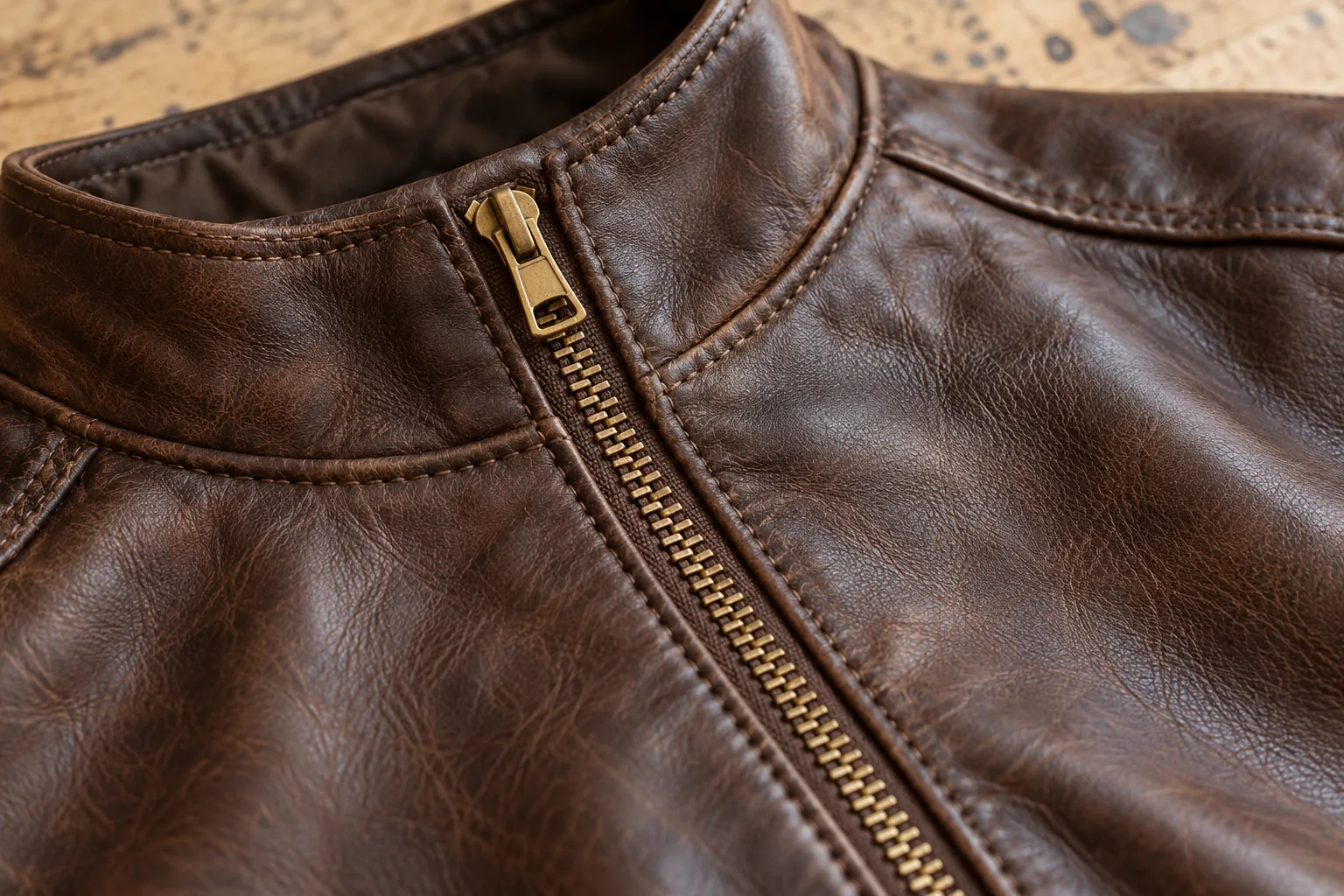
A failed fastening needs checking for slider, tooth and tape damage before deciding on replacement. Lining faults have their own extent and access requirements. Show the inside of the garment so a small outer fault is not quoted without considering what must be opened to reach it.
Finish after the repair
Cleaning, conditioning or colour work may be relevant alongside a structural repair, but they serve different purposes. Agree which marks and signs of age you want to keep. A softer appearance or a more even colour should not be confused with rebuilding weakened leather.
Questions before a repair
Can a tear disappear completely?
Do not assume that. The leather, location and repair method determine what remains visible; discuss the expected appearance first.
Should I glue a tear while waiting?
Avoid applying adhesive. It can stiffen or mark the leather and make a later repair harder to assess.
Can I request colour work at the same time?
Yes. Describe the desired result separately so structural repair and surface treatment can be assessed and quoted clearly.
Talk through your item
Bring your item to our Banstead workshop or send it by post from anywhere in the UK. Tell us about the damage and what you would like to keep or change; we will discuss the most suitable approach and agree the work and price before starting.
Explore Repair Atlas (opens in a new tab)