 Leather Jackets
 Leather Coats
 Motorcycle Clothing
 Leather Trousers
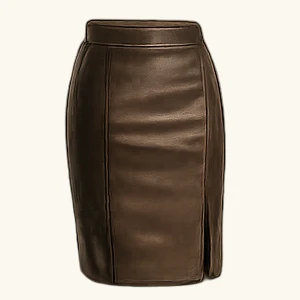 Leather SkirtsLeather Dresses
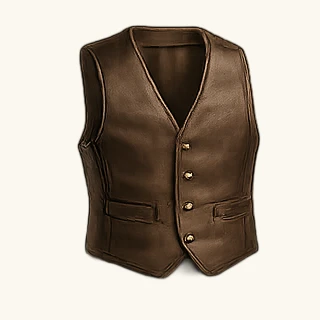 Leather Vests
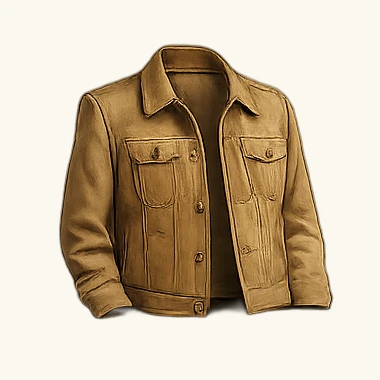 Suede & Nubuck
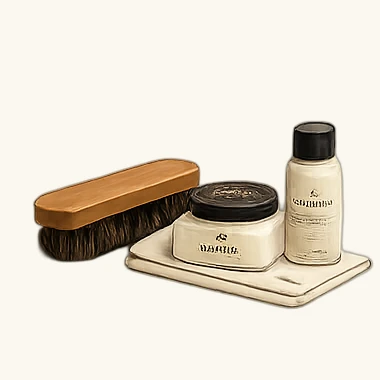 Cleaning & Care
Leather Leggings
Leather Trousers
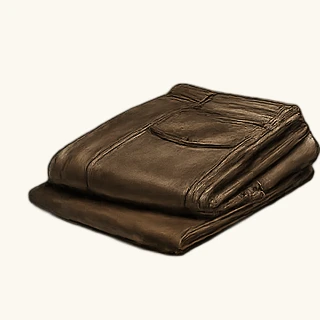
Skin-tight, usually in a stretch leather or leather-look fabric, with an elasticated waistband and almost no structural seams beyond the inner leg and centre back. The stretch panel or waistband elastic loses its recovery over time and is replaced as a complete unit, since it's inserted as a separate component rather than part of the leather itself.
Leather Sole Replacement
From £110 depending on item and complexity
We replace worn leather soles using traditional techniques and premium materials for durability and comfort.
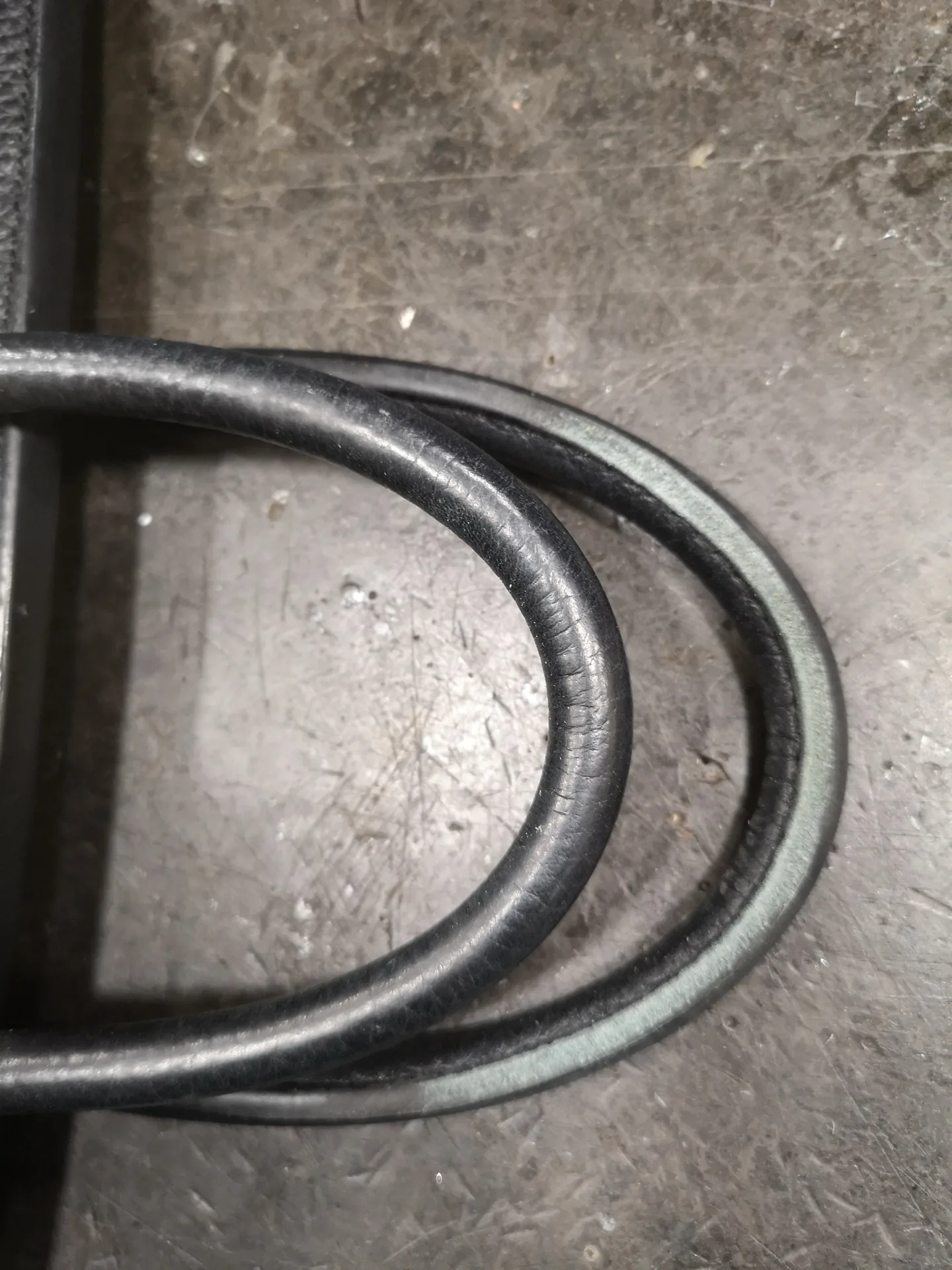
Real before/after pairs for this exact model are on their way - for now, here's recent work from the studio on similar pieces.
Between professional repairs, a few habits keep leather trousers in good condition:
- Hang jackets, coats and dresses on a broad, contoured hanger that supports the shoulder line - folding leather for storage creates crease lines that can crack the grain permanently over time.
- Condition a garment in regular use every 6-12 months with a leather-specific conditioner (never furniture polish or shoe wax, which are formulated for a different density of hide) - more often through a winter of weekly wear, less for an occasional-wear piece.
- If a jacket or coat gets caught in the rain, let it dry naturally at room temperature away from radiators, car heaters or hairdryers, then condition once it's fully dry to replace the oils lost in the wetting-drying cycle.
- Keep leather clothing out of direct sunlight and away from heat sources such as radiators, lofts and conservatories - UV and heat both drive out the natural oils in the hide and are the single biggest cause of the surface cracking we're asked to repair.
- Work a trace of zip lubricant or a light rub of beeswax into stiff zip teeth and stubborn poppers before they're forced - most 'broken zip' repairs we see began as a zip that was simply difficult to move.
- Store garments in a breathable cotton garment bag rather than sealed plastic, and give shearling and suede pieces room to air - trapped moisture is the main cause of mould on napped and pelt leathers.
Can you re-line a leather jacket or coat?
Yes - linings (usually satin, viscose or polyester) wear out and tear long before the leather shell does, especially at the shoulders and armholes. We remove the old lining completely, pattern a replacement from the original, and reinstate any inner pockets, so the finished garment looks and feels as it did when new.
Can you resize a leather jacket that's become too tight or too loose?
Within limits, yes. Taking a garment in is usually straightforward - side seams, the centre back seam and sleeves all have some allowance to work with. Letting a garment out is more restricted, since leather doesn't carry the generous seam allowances fabric does; we'll always assess the actual allowance available before quoting rather than assume it.
Can you replace a broken zip without it being obvious?
Yes - the aim on every zip replacement is that it disappears into the garment. We match the original gauge, tooth type and pull style, and restitch along the exact original stitch line, so the repair isn't visible unless you know precisely where to look.
Do you repair motorcycle leathers, including the armour pockets?
Yes. Motorcycle jackets, trousers and suits are safety garments, so we replicate the original stitch density and seam construction on any structural repair rather than just making it look tidy, and we reposition or repair armour pockets so the CE armour still sits correctly.
Can you match the colour on a jacket that's faded after years of wear?
In most cases, yes. We recolour and refinish leather to match the surrounding, less-worn areas as closely as possible, though on aniline and vegetable-tanned leathers - which develop a natural patina - some tonal variation is part of the character of the hide and can't always be fully removed.
Do you accept leather clothing repairs by post, or only in the studio?
Both. Many of our repairs arrive by Royal Mail from across the UK - pack the garment flat or on a folded hanger inside a suit bag inside the parcel to avoid new creasing in transit, and we'll assess it and confirm the repair and any cost before starting work.